
AN ONGOING SERIES — HUMAN INTEREST FEATURE
Why Idaho Is Number One
Part 2 of an Ongoing Series
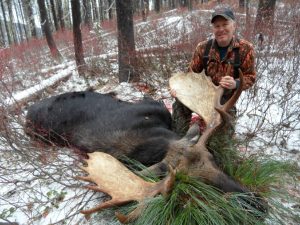
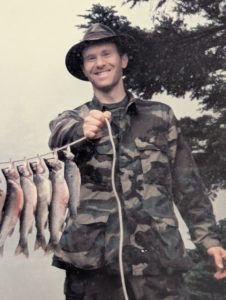 From two rooms above a post office to a practice — and a life — that kept growing.
Building Something of My Own
The move to Orofino was not simply a change of address. It was the first time I truly owned something — a practice, direction, a future I was building with my own hands. After years of working inside someone else’s vision, the weight of that independence felt both exhilarating and sobering. There was no one else to look to when something went wrong. And no one else to credit when it went right.
In 1985, the same year my son was born, I made a decision that would quietly shape the next decade of my professional life. I joined a management group — a structured program designed to help practitioners run their offices the way a business, not just a clinic, needs to be run. It was a humbling step for someone who had already been practicing for several years. Admitting that there was more to learn about the business side of medicine took a certain kind of honesty. But the results spoke for themselves. Patient care improved. Systems tightened. The practice began to grow in ways that felt sustainable rather than accidental.
Over the following years, I purchased the two other chiropractic practices in town. For a stretch of time, I was the chiropractor in Orofino — the only one. The post office building that had started with two modest rooms on the second floor eventually gave way to the entire floor. A full-spine X-ray machine. Therapy units were among the best available at the time. A waiting room that actually had patients in it.
The Map on the Wall
Outside the office, life was filling up in a different way entirely.
Now with two children — my daughter, who had made the move to Orofino with us back in 1985, and my newborn son — I wanted to give them the thing Idaho had always represented to me: wide-open country, hard work, and the kind of memories that only come from getting a little lost in the wilderness.
I went to the local Forest Service office and picked up a map. It became one of my most reliable tools — not for practice, but for the weekends. Every time a patient mentioned a good fishing hole, a camping spot worth the drive, or a trail nobody else seemed to know about, I would circle it. Then on Saturday morning, I would load up the family and go find it.
The boat helped. I had wanted one for years — one of those things that stays on a list long enough that buying it finally feels less like a luxury and more like a long overdue promise to yourself. I found a fourteen-footer and put it on Dworshak Reservoir, spending hours on that water with my kids, exploring the coves and the quiet stretches where the trees came right down to the shoreline. Those hours on the reservoir became some of the steadiest memories of those years — unhurried, uncomplicated, and entirely Idaho.
When the Adjustments Weren’t Enough
The practice continued to grow. After filling the post office building, I eventually made the move to the old medical building near Dr. Wentz’s office — a larger, more established space that reflected how far things had come from that borrowed $4,000 and two rooms with a single adjusting table. Over those years I mentored several associate doctors, helping them learn not just how to treat patients, but how to build practices of their own across the state. Teaching had become part of the work, and I found I was good at it.
But something else was happening in the exam rooms that I could not ignore.
Patients who should have been responding to chiropractic adjustments were not responding the way they once had. I adjusted my technique. I adjusted my protocols. The results were still inconsistent in ways that nagged me. I was too careful as a clinician to let that go unexplained.
I began to look elsewhere for answers.
Nutrition was not a word that showed up much in my chiropractic training. But the more I looked, the more it seemed like a missing piece — not a replacement for what I was already doing, but a foundation that my patients may have been lacking. I began exploring in earnest. I connected with a company called Bio Nativus and helped develop a protein shake built around pea protein and trace minerals — elemental support that many of my patients simply were not getting from their diets. I started looking into phytonutrients. I began asking different questions during patient consultations.
Slowly, almost without intending it, I found myself moving into territory that most chiropractors of my era were not exploring. The alternative care space — nutrition, supplementation, functional approaches to chronic health problems — was not yet mainstream. It was, in some circles, still viewed with skepticism. But my patients were responding. And for someone who had always followed the evidence in front of them rather than the consensus behind them, that was enough.
The two rooms above the post office had been a beginning. This was something else entirely — a new direction taking shape, one patient at a time, in a small town in the Idaho wilderness.
Part 3 continues: The move to Highway 12, and how a chiropractor from Orofino found himself at the frontier of regenerative medicine.
Dr. Dennis Harper, DC, ND has practiced in Orofino, Idaho for 42 years. This series celebrates that milestone.


